Thailand's Board of Investment (BOI) approved 158 billion baht ($4.5 billion) in new electric-vehicle and battery-related manufacturing projects at its August meeting, with China's BYD and Great Wall Motor accounting for the two largest single approvals as both companies expand production capacity at existing plants in Rayong province.
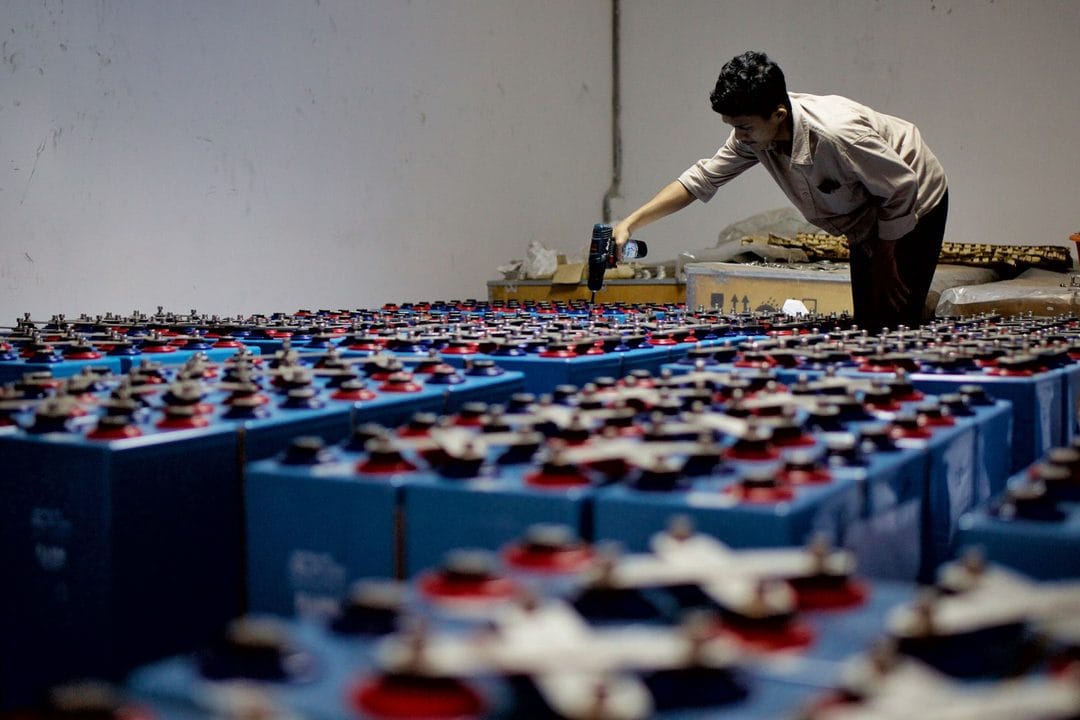
BYD received clearance for a 42 billion baht ($1.2 billion) expansion that will add a second battery-cell assembly line to its Rayong facility, which began vehicle production in July 2024. The expansion targets output of 300,000 battery packs annually by 2028, up from a current capacity BOI officials put at roughly 150,000 units, according to the approval documents published on the agency's website.
Great Wall Motor's approved project, valued at 31 billion baht ($885 million), covers a new stamping and body-welding line at its existing Rayong site rather than a separate facility, according to a BOI statement. The Chinese automaker has produced vehicles in Thailand since 2021 through its acquisition of a former General Motors plant, and the latest approval is aimed at localizing a higher share of components currently imported from China to qualify for higher tiers of Thailand's EV3.5 subsidy scheme.
The BOI approvals bring cumulative EV-sector investment commitments in Thailand to roughly 340 billion baht since the government launched its EV3.0 incentive package in 2022, according to figures the agency provided to Reuters. Thailand's Finance Ministry has budgeted 12 billion baht for EV subsidies in the 2027 fiscal year under the successor EV3.5 program, which ties subsidy levels to the share of battery cells and other components sourced domestically rather than imported.
Not all of the approved capacity is guaranteed to be built on the announced timeline. BOI Secretary-General Narit Therdsteerasukdi acknowledged in a briefing that two smaller battery-materials projects approved in the same session, both linked to Chinese cathode-material suppliers, remain contingent on securing long-term supply agreements with automakers still finalizing 2027 production plans. The BOI has previously approved projects that were later delayed or scaled back, including a 2023 battery-recycling facility whose construction has yet to begin.
Thailand is competing directly with Indonesia and Vietnam for the same pool of Chinese EV manufacturing investment, and analysts at Kasikorn Research Center estimate the country's share of Southeast Asian EV production capacity at roughly 45%, ahead of Indonesia's nickel-anchored battery-materials cluster. The Federation of Thai Industries said EV and EV-component exports reached $2.1 billion in the first half of 2026, up from $1.4 billion in the same period a year earlier, driven primarily by shipments to Australia and the Philippines.