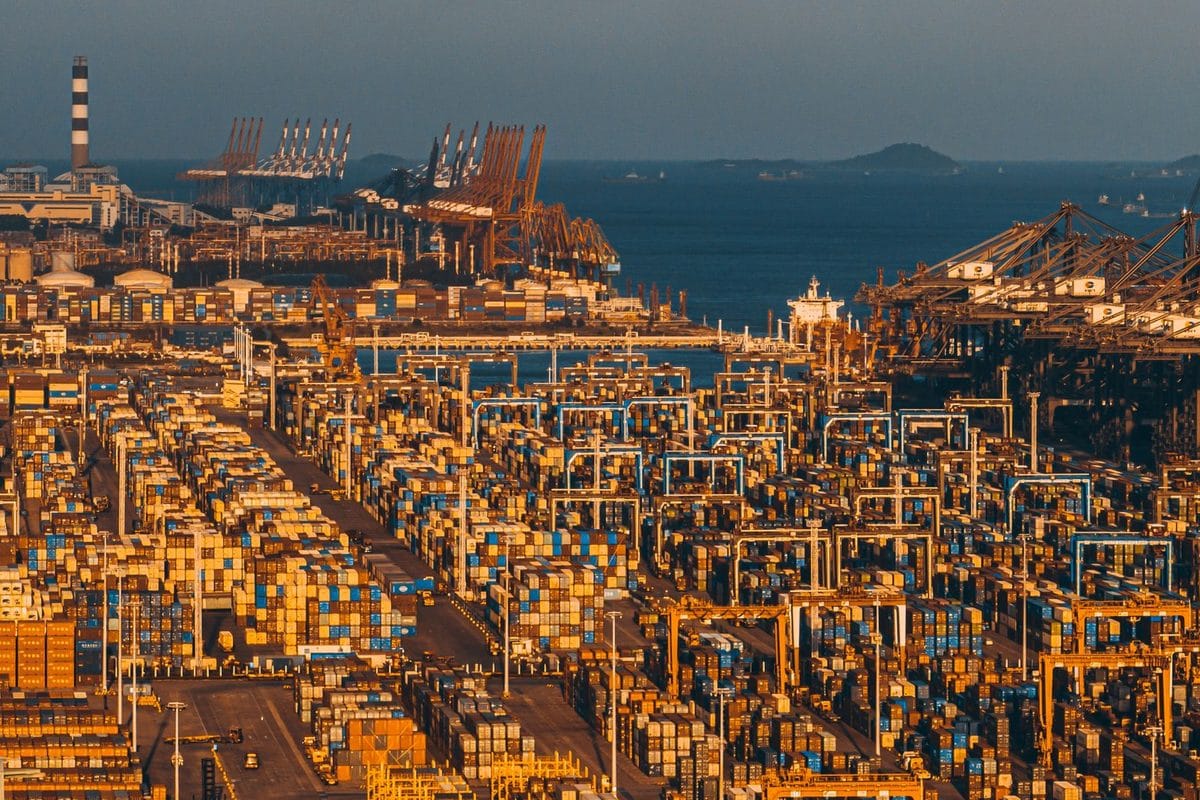
A year after tariffs imposed under U.S. President Donald Trump set off a rush by manufacturers to diversify away from China, some of that production is quietly moving back. Reuters reporting out of Beijing and Hong Kong, published September 14, 2026, found that buyers ranging from U.S. retailer Target to Chinese fast-fashion exporter Shein have restored or expanded orders with Chinese suppliers after running into supply gaps, equipment shortages, and unstable power in the countries they moved to. The shift is not yet visible in aggregate trade data, but it marks a reversal in sentiment for a "China plus one" strategy that, on paper, looked simple a year ago.
Orders drift back to Dandong and Hangzhou
Heather Kuang, vice president of Dawang Metals, a family-owned metal-casting company in the northeastern Chinese city of Dandong, told Reuters that a major U.S. agricultural-machinery customer shifted some of its orders to India last year, then came back after running into problems there. Dawang itself had explored moving part of its own production offshore before dropping the idea. "China's supply-chain advantage is still too great, and it is difficult to replicate domestic production elsewhere," Kuang said.
Jin Chaofeng, an outdoor-furniture exporter based in Hangzhou, went further: he closed a workshop he had opened in Ho Chi Minh City in 2024 and moved the work back to China this year. He said he struggled to source basic inputs locally — down to screws and moulds for cup holders — and had to keep shipping them in from China anyway. Once he added up freight, downtime and the cost of duplicating tooling, the arithmetic that had justified the move no longer held. "Once I factored everything in, the overall cost was not much different, so there was no point," he said.
Two people familiar with the matter told Reuters that Target has moved some orders back to Chinese suppliers, citing supply-chain disruptions and production constraints at its alternate sites; the retailer did not disclose the value or duration of those orders and did not respond to a request for comment. Shein, meanwhile, is scaling back operations in Vietnam after what people familiar with the matter described to Reuters as a warehouse experiment there — a retreat from a build-out the company had pursued as part of its own diversification push.
Why the tariff math changed
The original case for leaving China rested on a straightforward tariff gap. According to Economist Intelligence Unit estimates from July 2026, the effective U.S. tariff rate on Chinese goods stood at roughly 20%, against 6.1% for Vietnam, 13.4% for Indonesia and 4.5% for Thailand. That spread was wide enough to cover the cost and disruption of relocating a factory. It no longer is, at least not for everyone: Washington has since extended tariffs to a wider range of countries, and the EIU said the narrowing gap is prompting some Chinese manufacturers to rethink plans for overseas investment they had already begun.
For a firm weighing whether to keep a Chinese production line running alongside a new one in Vietnam or India, a shrinking tariff advantage changes the calculation directly — it removes the margin that was supposed to absorb the cost of building a second supply chain from scratch. Reuters found no single company willing to disclose exact figures on how much of its sourcing has shifted back, and there is no aggregate trade data yet confirming the scale of the reversal. What multiple buyers described consistently, however, was a practical problem underneath the tariff spreadsheet: factories built in a hurry outside China have struggled to match the skilled labor, dense supplier networks and consistent power supply that Chinese manufacturing hubs have spent decades assembling.
Power has become as decisive as price
Energy reliability has emerged as a second factor pulling some production back, separate from tariffs altogether. Stanislaw Krykun, chief executive of Poland-based packaging firm DST Pack, described working through a stretch in April when plastic input costs spiked 15% because of soaring oil prices tied to a Middle East crisis that tested the energy reliability of manufacturing bases well beyond the region. DST Pack sources 80% of its production from a factory in Shenzhen, with 10% each from long-standing backup plants in the United States and Europe — alternatives that cost two to three times more per unit. "In case of any crisis, the Chinese production plants will be the most stable plants you can use," Krykun said.
Krykun said he had already ruled out relocating to Southeast Asia after watching a business partner struggle there. "He faced a lot of issues starting with production and finishing with the export," he said. "The system there doesn't really work as smoothly as it works in China." Guan Baokui, a Qingdao-based lawyer who advises manufacturers on cross-border sourcing, told Reuters that Vietnam and Indonesia suffer from an "unstable and not continuous" electricity supply — a problem he said intensified as global oil prices climbed this year, exposing gaps in grid capacity that lower tariff rates cannot offset.
Southeast Asia is not being abandoned
The pattern is uneven rather than a wholesale retreat from Southeast Asia. India, Indonesia and Vietnam have all continued to draw genuine investment from electronics, automotive and other manufacturers this year despite the operational complaints surfacing elsewhere in the reporting. Vietnam in particular remains one of the largest beneficiaries of the broader supply-chain diversification that began under earlier rounds of U.S. tariffs, still attracting billions of dollars in foreign investment even as some individual buyers pull orders back toward China.
- Yu Yangxian, who sells electric lockers and vending machines, is keeping roughly one-eighth of her company's total production capacity in Vietnam specifically as a hedge, saying she could expand it again "if Trump goes crazy" and tariffs spike further.
- Summer Hu, a Ningbo-based sales agent for gift and outdoor sports products, said her company has not seen U.S. orders increase at all this year and remains cautious about reading too much into the reversal seen elsewhere.
- Other exporters contacted by Reuters described treating their Southeast Asian capacity as insurance against a future spike in tariffs rather than as a business to wind down — even where current volumes have shrunk.
"We are not that optimistic," Hu said of the broader trend. "The competition is too intense." Her comment is a reminder that the companies Reuters found moving back to China are not evidence of a uniform swing — some exporters are simply not seeing the U.S. demand that would justify reversing course at all.
What the Trump-Xi meeting is unlikely to change
The reshoring reports are surfacing days ahead of an expected meeting between Trump and Chinese President Xi Jinping around September 24, which businesses on both sides are watching for any sign of a proposed mechanism to lower barriers on non-sensitive goods. Few exporters interviewed by Reuters expect the summit to resolve the underlying uncertainty that pushed them to diversify in the first place, and several described treating the current arrangement as durable only until the next policy shift.
Kuang, at Dawang Metals, put it plainly. "We gave up expecting much from Trump long ago," she said. "We can't depend on him for our livelihood or pin all our hopes on him. We have to find export markets to sustain ourselves." That posture — hedging supply chains against policy risk rather than betting on any single outcome from Washington or Beijing — is what is now shaping decisions in factories from Dandong to Hangzhou to Shenzhen, regardless of which way the tariff spread moves next.