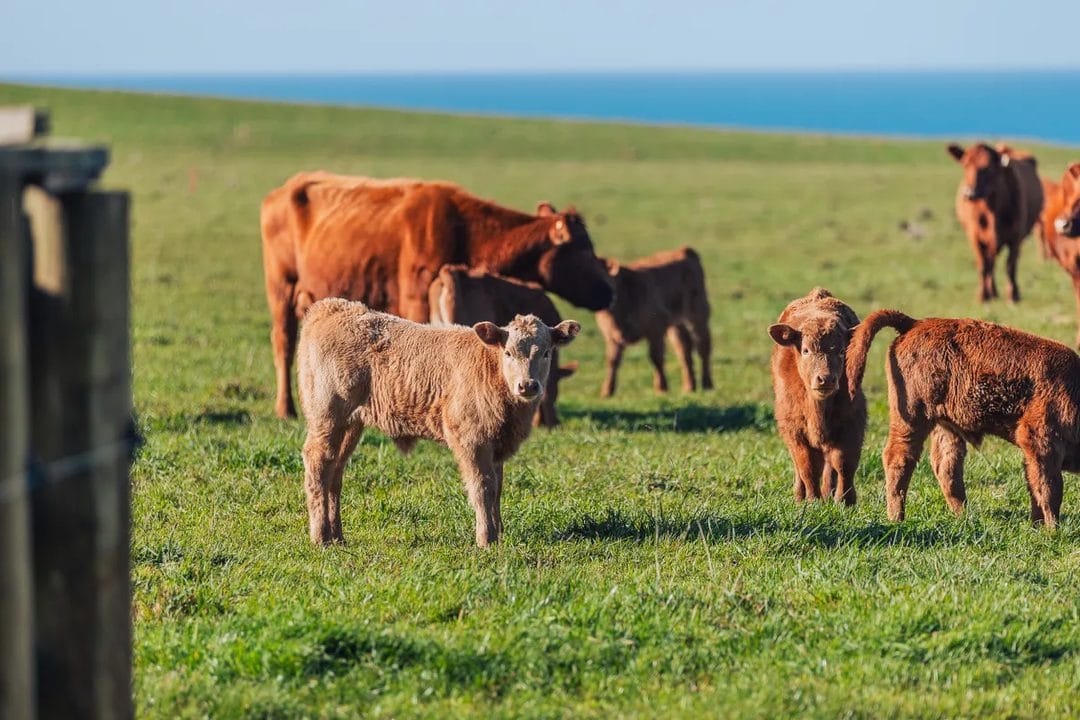
Indonesia's sovereign wealth fund, Danantara, has agreed to invest $2.5 billion for a 25% stake in a new joint venture built around JBS's Australia and New Zealand meat operations, the companies confirmed on August 7. The deal, structured through Danantara's investment arm, Danantara Investment Management (DIM), pairs the Brazilian meat processor's regional production base with Indonesian capital aimed at expanding protein supply chains across Southeast Asia. It remains subject to Australian regulatory clearance and other standard closing conditions.
How the capital is structured
DIM's $2.5 billion commitment arrives in two tranches: $800 million at closing, followed by a further $1.7 billion spread over the next three years. JBS is contributing the entirety of its Australia and New Zealand businesses to the new entity, an operation that generated approximately $8.1 billion in net sales in 2025.
Once DIM's full commitment is deployed, the joint venture intends to raise up to $2.5 billion in external debt financing on top of the equity injection. That would give the partnership as much as $5 billion in total capital to deploy toward processing capacity, distribution infrastructure and, eventually, new production sites closer to Indonesian and broader Southeast Asian demand centers.
A food-security priority, not a side bet
"Together with Danantara, we are well positioned to expand our presence across Indonesia and Southeast Asia, strengthen regional protein supply chains, broaden market access and accelerate the development of Indonesia's protein sector," JBS chief executive Gilberto Tomazoni said in the companies' joint statement.
For Danantara, the transaction advances a mandate that President Prabowo Subianto set when he launched the fund, often described in Jakarta as an Indonesian counterpart to Singapore's Temasek Holdings. Prabowo earmarked the fund's first wave of roughly $20 billion in commitments for three areas: energy, natural resource processing, and food security — the category into which the JBS partnership falls.
The demand case
The commercial logic rests on population scale and shifting diets. ASEAN's combined population reached approximately 745 million people in 2024, according to the ASEAN Secretariat, with rising incomes and urbanization pushing per-capita protein consumption higher across the bloc's larger economies.
A joint OECD and Food and Agriculture Organization outlook projects global meat consumption will keep climbing through 2034, with poultry demand up an estimated 21%, sheep meat up 16%, beef up 13% and pork up 5% over that period. Indonesia, the Philippines and Vietnam are named in the report as the principal drivers of that regional growth curve, which is the market the new joint venture is positioned to serve from its Australian and New Zealand production base.
Indonesia's own protein push predates the JBS deal. Rice output climbed 12.6% year-on-year in the third quarter of 2025, a gain officials have used to declare rice self-sufficiency reached, and Prabowo has since redirected attention to fish protein, with a stated target of reaching 1,100 fishing villages in 2026. Those domestic programs and the JBS joint venture draw on the same policy logic — securing protein supply through direct state involvement rather than leaving it to import markets — even though the two run through separate funding channels.
A buyer with global scale, on both sides of the table
JBS is not a small counterparty. The company began trading on the New York Stock Exchange in June 2025 under the ticker JBS, alongside its existing São Paulo listing, and posted roughly $86.2 billion in global revenue for 2025 — the largest of any meat processor worldwide, ahead of U.S. rival Tyson Foods at $54.4 billion. That scale gives Danantara a partner with the balance sheet and processing infrastructure to move quickly once the Southeast Asian expansion phase begins, rather than building capacity from scratch.
JBS shares climbed as much as 4.3% in New York trading after the announcement, a reaction that reflects investor comfort with a deal that brings in fresh capital without diluting the parent company's control of its core Brazilian and North American operations. The Australia and New Zealand unit, by contrast, moves into a structure where Danantara holds meaningful influence over a quarter of its equity and, implicitly, a say in how growth capital gets allocated.
Part of a much larger spending push
The JBS stake is one piece of a far bigger 2026 deployment. Danantara has said it intends to place up to $14 billion in new investments this year, funded largely by dividends flowing up from its portfolio companies, with renewable energy, digital infrastructure, healthcare and food security named as the priority sectors for a population approaching 300 million. Within food security alone, the fund has separately earmarked around $1.2 billion for poultry-farm construction and is backing fish-farming projects covering roughly 20,000 hectares alongside dairy operations spanning 500,000 hectares.
Not everyone in Jakarta is comfortable with that pace of spending. Fitch Ratings revised Indonesia's sovereign credit outlook to negative in March, citing Danantara's expansive investment plans and unresolved questions about fiscal governance and transparency at the fund. More than 458 Indonesian economists and academics had already signed an open letter criticizing overlapping mandates and limited financial disclosure, warning that a state vehicle of Danantara's size risks crowding out private capital in the same sectors it is meant to catalyze.
Fund officials have not detailed how the JBS stake will be financed beyond the equity commitment already disclosed, nor whether debt raised at the joint-venture level will carry any state guarantee. Completion is not guaranteed on the current timeline, either: Australian competition and foreign-investment authorities still need to sign off on a transaction that hands a quarter of a nearly $8.1 billion meat-processing business to a foreign state fund, a review for which JBS and Danantara have not publicly given a completion date.