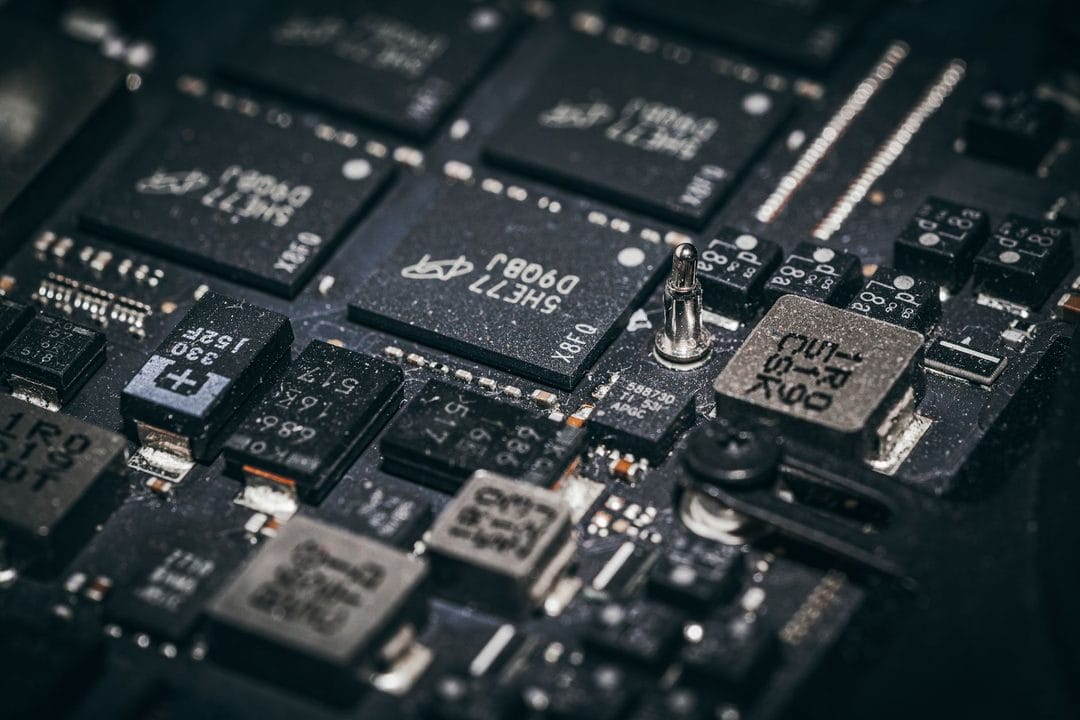
For years the public conversation about semiconductors focused almost entirely on the front end of manufacturing, the giant fabrication plants that etch circuits onto silicon wafers. A quieter contest is now drawing attention and investment to a later stage of the process: the assembly, testing and packaging of finished chips. Across Asia, governments and manufacturers are treating this back end as a strategic prize in its own right.
From afterthought to bottleneck
Packaging is the step that takes a bare silicon die, encloses it in a protective housing, connects it to the outside world and verifies that it works. It was long regarded as low-margin, labour-intensive work, the unglamorous final stretch after the expensive wafer fabrication was done.
That perception has shifted. As gains from shrinking transistors become harder and costlier to achieve, engineers have turned to advanced packaging to keep improving performance. Techniques that stack chips vertically or place several dies side by side on a single base allow more computing power to be squeezed into one component without a corresponding leap in fabrication technology.
Why the work concentrated in Asia
The outsourced assembly and test industry, often shortened to OSAT, grew up largely in East and Southeast Asia. Several factors drove that concentration:
- Proximity to the wafer fabrication plants that supply the dies.
- A deep base of manufacturing skills and electronics supply chains.
- Decades of accumulated process knowledge that is difficult to replicate quickly elsewhere.
The result is that a large share of the world's chips, regardless of where the wafers are made, still pass through Asian packaging and testing facilities before reaching device makers.
New money, new locations
The economics of advanced packaging have prompted a wave of capacity announcements. Established players are expanding existing sites, while economies that previously sat on the edge of the industry are courting investment in assembly and test plants as a more attainable entry point than building leading-edge fabrication from scratch.
Several governments in the region have folded packaging into broader semiconductor strategies, offering incentives for plants that handle the back end rather than concentrating support solely on wafer fabrication. The appeal is straightforward. A packaging facility costs far less than a cutting-edge fab and can begin operating sooner, while still anchoring a country inside the global chip supply chain.
The link to artificial intelligence hardware
Demand for the most advanced packaging has been pulled upward by processors used in data centres and artificial intelligence systems. These chips often combine logic and high-bandwidth memory in a single package, a configuration that depends heavily on the back-end techniques now in short supply. Capacity for the most sophisticated methods has at times struggled to keep pace with orders, turning packaging into one of the tighter links in the chain.
Risks beneath the expansion
The rush carries familiar dangers. Industry history is marked by cycles in which heavy investment during a boom gives way to overcapacity once demand cools. Packaging is not immune, and a surge of new plants opening around the same time raises the prospect of a glut in standard, lower-end work even as advanced capacity stays scarce.
There are also questions of skills and equipment. Advanced packaging relies on specialised tools and trained technicians, and the supply of both is finite. Economies hoping to build a back-end industry quickly may find that the buildings go up faster than the workforce and equipment needed to fill them.
A more visible final step
The broader significance is that a stage once treated as a commodity has become a point of leverage. Control over advanced packaging increasingly shapes who can deliver the most powerful chips and how reliably. For Asian economies already central to the industry, the back end offers a way to deepen that role; for newcomers, it offers a foothold. Either way, the part of the process that finishes a chip is no longer an afterthought in the contest over semiconductors.