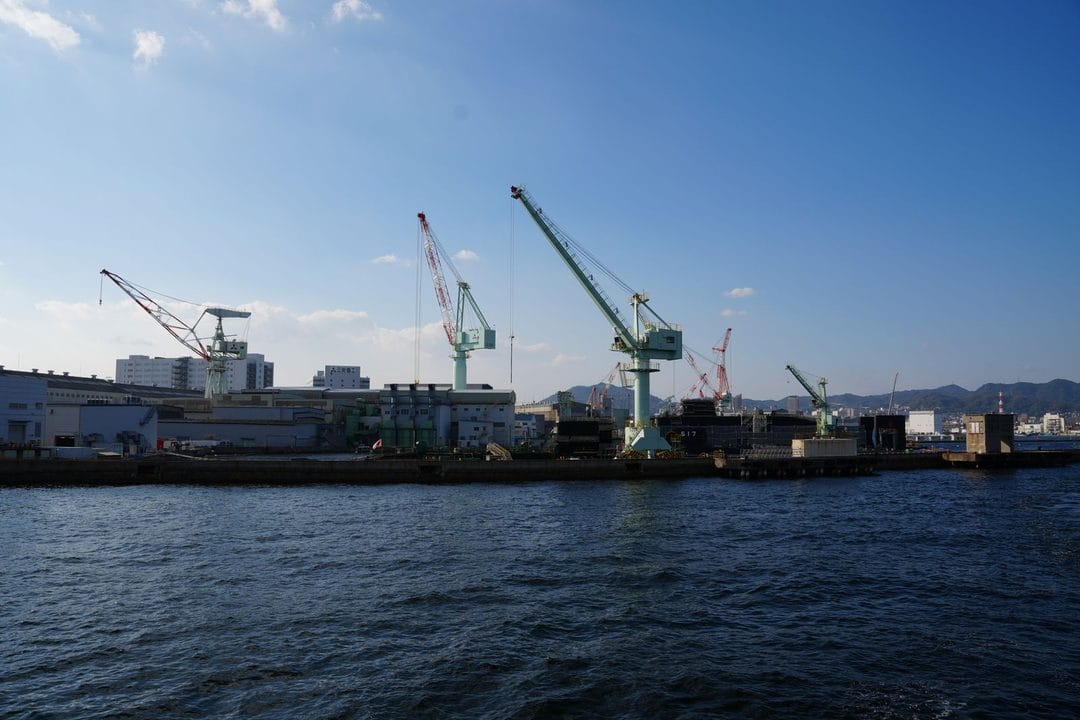
Shipyards in South Korea, Japan and China are booking new vessel orders at a pace that has pushed delivery slots for large commercial ships years into the future, as owners move to replace aging fleets ahead of tightening international emissions rules. Industry tracker Clarksons Research has reported that the global orderbook, measured against the existing world fleet, sits near its highest share since the shipping boom of the mid-2000s, with liquefied natural gas carriers and large container ships accounting for much of the recent contracting activity.
LNG Carriers Anchor the Contracting Wave
At South Korea's three largest shipbuilders — HD Hyundai, Hanwha Ocean and Samsung Heavy Industries — new bookings have concentrated heavily in LNG carriers, a vessel class where Korean yards hold a long-standing technical edge in cryogenic tank design. Delivery slots at several Korean shipyards are now booked out toward 2028 and 2029, according to filings tracked by the Korea Offshore & Shipbuilding Association.
Behind that push, Japanese yards, led by Imabari Shipbuilding and Japan Marine United, have taken a smaller but growing share of the same LNG wave, alongside continued orders for bulk carriers tied to long-term charter contracts with utilities and trading houses across the region.
Chinese Yards Widen Their Share
Close to half of new global orders by gross tonnage now go to China's state-linked shipbuilding group CSSC and a cluster of privately owned yards along the Yangtze River delta, according to Clarksons Research figures, with output expanding across almost every vessel category from container ships to car carriers. That share has grown steadily since 2021, aided by lower construction costs and expanded dry-dock capacity built during the previous decade.
Yet price competition between Chinese and Korean yards has narrowed only on mid-tier vessel types. Korean builders still command a premium on LNG carriers and very large gas carriers, where technical qualification requirements limit the pool of eligible shipyards.
Regulation Sets the Contracting Clock
The International Maritime Organization's carbon-intensity rules, phased in since 2023 under the EEXI and CII frameworks, are pushing owners to retire older, less efficient tonnage rather than retrofit it, feeding demand for newly built vessels designed around dual-fuel and alternative-fuel engines. Ship financing arms of several Asian banks have reported rising loan volumes tied to newbuild contracts for methanol- and ammonia-ready vessels, even as the underlying fuel infrastructure for those alternatives remains limited outside a handful of major ports.
Separately, retrofit specialists in Singapore and Busan have reported longer waiting lists for scrubber and ballast-water system installations, a parallel trend among owners choosing to extend the life of mid-age vessels rather than compete for scarce newbuild slots.
Backlogs Reshape Yard Investment Plans
The extended backlogs have prompted fresh capital spending on yard capacity across the region. Hanwha Ocean has continued expansion work at its Geoje facility, while several Chinese yards have added dry-dock space specifically configured for larger container ships and gas carriers.
According to shipping analysts tracking the sector, current contracting levels, if sustained, would mark one of the longest continuous upcycles in newbuild demand since the fleet expansion that preceded the 2008 financial crisis — though few expect the current wave to end in the same abrupt correction, given that much of today's demand is tied to regulatory replacement cycles rather than speculative ordering.