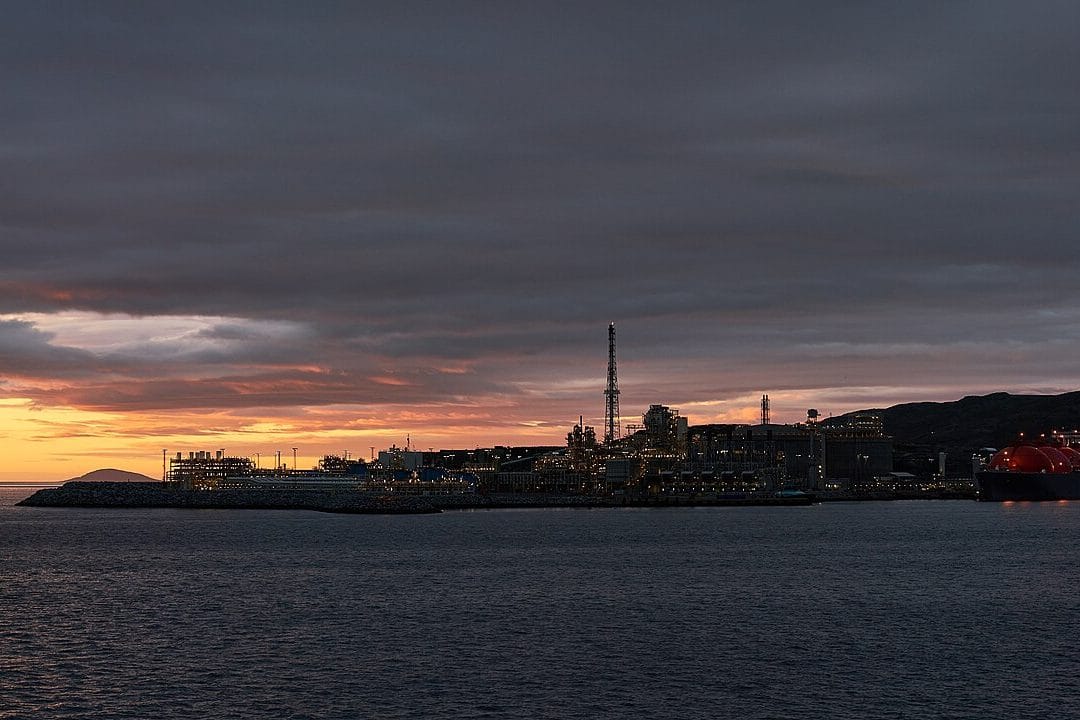
Asia's biggest buyers of liquefied natural gas are quietly rebuilding their long-term contract books, locking in supply that stretches into the late 2030s even as a wave of new export capacity threatens to push spot prices lower. The shift, described by traders and analysts across Tokyo, Seoul and Singapore in recent weeks, reverses the caution that gripped the region after the 2022 price spike and signals that Asian utilities and trading houses now see structural risk in relying on the open market.
The buying coincides with a rare moment of expected oversupply. A cluster of new projects in the United States and Qatar is scheduled to bring tens of millions of tonnes of additional annual capacity online over the next two to three years, and several analysts expect the global market to tip into surplus before the decade is out. According to consultancies tracking the trade, that prospect has done little to slow long-term deal-making — if anything, it has accelerated it, because buyers want to be on the right side of those contracts before the cheap molecules are claimed.
Why the contracts are coming back
For much of the past decade, Asian importers leaned on the spot market and short-term deals, betting that flexibility was worth more than the security of a 15- or 20-year commitment. That calculation broke in 2022, when Russia's invasion of Ukraine sent European buyers scrambling for cargoes and pulled prices in Asia to record highs. Utilities that had trimmed their long-term cover found themselves exposed, and the lesson stuck.
The move back toward term contracts is most visible among Japanese and Korean buyers, who have historically anchored the Asian market. Japanese trading houses and power generators have signed or extended a series of multi-year supply agreements over the past 18 months, several tied to US Gulf Coast projects. Korea's state-linked importer has likewise indicated it wants to rebuild a portfolio weighted toward predictable, oil-indexed or hybrid-priced volumes rather than the more volatile spot benchmark.
The reasoning is partly defensive and partly commercial. A long-term contract guarantees a buyer physical gas during a winter squeeze or a supply disruption, which is the core worry for any utility keeping the lights on. It also gives trading arms a base load of volume they can optimise — diverting cargoes to whichever market pays most on a given day, a practice known as portfolio trading that several Japanese and Singaporean firms have built into a profit centre.
The role of the trading houses
Japan's large trading companies have become some of the most active intermediaries in the global LNG business, signing supply deals far larger than their own domestic demand requires. The surplus volume is sold on into China, Southeast Asia and Europe, turning the firms into floating merchants of gas. Analysts say this model only works if the underlying contracts are long enough to justify the commitment of capital, which is one reason term deals are back in fashion even as spot prices look set to soften.
Singapore has positioned itself as the trading hub for this activity, with several majors and Asian utilities running their LNG desks from the city-state. The government there has spent years trying to deepen the market for a regional price benchmark, and the renewed flow of long-term contracts gives those desks more cargoes to move.
Southeast Asia turns from exporter to importer
The most consequential change in regional demand is happening in Southeast Asia, where countries that once exported gas are now lining up to import it. Domestic fields in Indonesia, Malaysia and Thailand are maturing, and gas-fired power demand keeps climbing as economies grow and air conditioning spreads. Vietnam and the Philippines have both moved to bring in import terminals to fuel new power plants.
This reshaping of the map matters for the contract wave. New importers without the credit history or balance sheet of a Japanese utility often struggle to sign the long-term deals that project developers demand before taking a final investment decision. That gap has created an opening for the established trading houses, which can sign the term contract themselves and then on-sell shorter, smaller volumes to the emerging buyers — taking the credit risk and the margin in exchange.
Demand growth in the region is real but uneven. Some planned import projects have stalled over pricing disputes, since gas bought at oil-linked rates can look expensive against domestic coal, and several governments are wary of locking households into a fuel whose price they cannot control. The result is a market expanding in fits and starts rather than a smooth ramp.
China remains the swing factor
No forecast of Asian gas demand holds together without a view on China, and that view is harder to pin down than it was a few years ago. Chinese LNG imports surged through the late 2010s, then turned volatile as the country's buyers grew adept at switching between pipeline gas, domestic production, spot LNG and term contracts depending on price.
When spot prices fall, Chinese importers tend to soak up cheap cargoes; when they rise, those same buyers throttle back and lean on pipeline supply from Russia and Central Asia. That price sensitivity makes China the swing consumer in the global market and a source of genuine uncertainty for anyone modelling the surplus. Several analysts caution that if Chinese demand grows faster than expected, the anticipated glut could prove shallower and shorter than the headline capacity figures suggest.
Chinese national oil companies have also signed their own long-term deals with US and Qatari suppliers, partly to secure volume and partly to acquire cargoes they can trade. That gives Beijing's firms a foot in the same portfolio-trading game the Japanese houses pioneered, intensifying competition for the most flexible contracts.
The pricing question hanging over the surplus
The central tension is straightforward. If new supply arrives as scheduled and demand grows only modestly, spot prices should fall, which would reward buyers who stayed flexible and punish those who locked in volume at higher indexed rates. If demand surprises to the upside — through a cold winter, a stronger Chinese economy, or delays to the new projects — the buyers holding firm term contracts will look prescient.
Most of the region's large importers are hedging that bet by doing both: signing term contracts for a base load of supply while keeping a slice of their requirement open to the spot market. The balance between the two has shifted back toward term cover, but few buyers are abandoning flexibility entirely. The memory of 2022 argues for security; the prospect of a glut argues for restraint.
What is clear is that the next two years will test the strategy. The new export capacity is largely built or under construction, and the contracts now being signed will define who profits when those cargoes start to flow. For Asia's buyers, the wager is that paying for certainty today beats being caught short again — even if the spot market, for a while, makes that certainty look expensive.