
The third week of May 2026 has produced earnings releases and policy decisions across Asia that materially shift the regional business outlook for Q3. Here is the consolidated briefing for capital-allocators, business analysts, and operators tracking the Asia macroeconomic environment.
Bank of Japan policy: the hold that was actually a hike
The Bank of Japan held its policy rate at 0.5 per cent on 21 May, but Governor Ueda's accompanying statement contained the carefully-worded acknowledgement that "policy normalisation will continue at a measured pace consistent with the underlying inflation trajectory." Markets priced this as a 25 basis-point hike before year-end, with the implied path putting Japanese policy rates at 0.75 per cent by December.
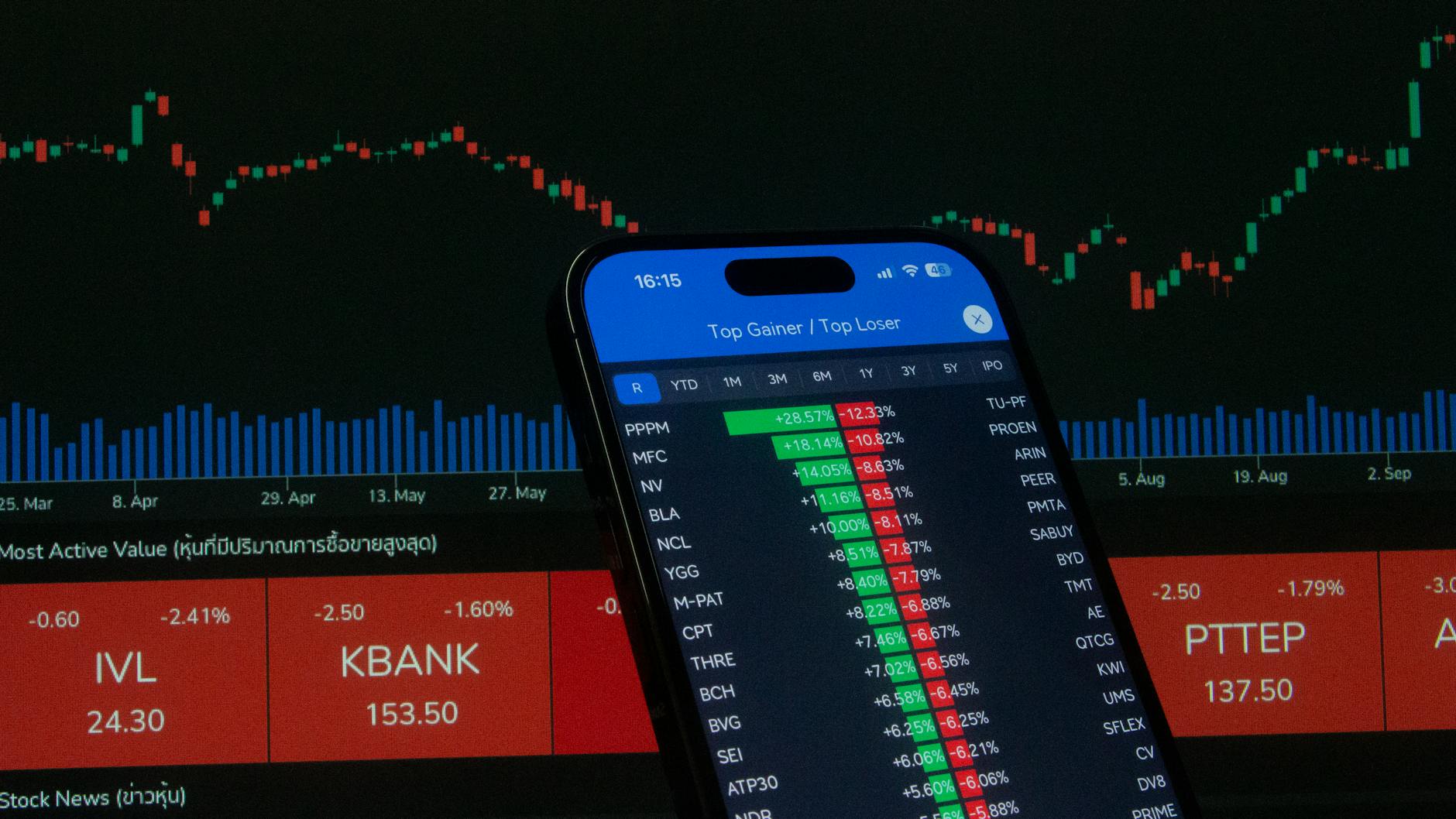
The yen reacted by strengthening from 152 to 148.5 against the dollar in 48 hours. The impact on Japanese exporters is the familiar story — Toyota, Honda, and Sony all face the FX translation hit at quarter-end. The impact on Japanese inflation expectations and on the carry-trade pricing for the dollar-yen pair is the bigger structural story.
South Korean Q1 GDP comes in soft
Statistics Korea released Q1 2026 GDP figures on 22 May at +0.4 per cent quarter-on-quarter, below the 0.6 per cent consensus. Exports were robust (+1.8 per cent quarter-on-quarter), but private consumption shrank 0.3 per cent and construction investment fell 2.1 per cent. The Lee Jae-myung administration's spending response is now expected in late June: a supplementary budget in the 20-28 trillion won range targeting household income support and SME credit.
The won has been under quiet pressure, trading at 1,395 to the dollar by end of week — modest depreciation but the lowest since the 1,418 peak in November 2024. The Bank of Korea is on hold but the FX rhetoric from the new government has been more interventionist than the previous administration.
India equities continue the run, but the dispersion is widening
The Nifty 50 closed Friday at 26,140 — up 8.3 per cent year-to-date. The story beneath the headline: the top 10 names by performance contributed 73 per cent of the index gain. The mid-cap and small-cap indices have actually gone backwards in 2026 by 4-7 per cent.
The IPO pipeline is heavy. ZepCard, the Walmart-Flipkart payments subsidiary, filed prospectus on 19 May for a $1.4 billion offering. Tata Capital is reportedly preparing a Q3 2026 IPO at a $14 billion target valuation. Reliance Jio Platforms continues to drag its feet — the IPO has been "imminent" for three years.
For Asia-focused fund managers: the bifurcation between Indian large-cap performance and the rest of the Indian market is the kind of pattern that historically precedes a sharp mean-reversion. The timing is genuinely unpredictable, but the structural pressure is building.
China PMI flash estimates and the property sector
Caixin's flash manufacturing PMI for May, released 21 May, came in at 50.4 — barely above the expansion-contraction line and below the 50.8 consensus. The services PMI at 51.2 was firmer but also below expectations. The drag continues to be the property sector, where new home sales in 30 major cities were down 16 per cent year-on-year in the first three weeks of May.
The PBoC response is the expected one: a 25-basis-point cut to the 1-year medium-term lending facility on Wednesday, taking it to 1.70 per cent. The reserve ratio cut is on the table but probably waits until June. The fiscal response — Beijing's special bond program for local government — has been the more important driver of credit growth this year, with approximately ¥2.4 trillion deployed through end of April.
The Asian banking sector earnings cycle
DBS reported Q1 results on 19 May with net profit at S$2.84 billion, slightly above consensus. CEO Tan Su Shan's guidance was cautious on the second half. UOB and OCBC follow next week. The Singapore banking trio has been the most consistently profitable Asian bank story for three years; the question is whether wealth-management margins compress as MAS implements its 2026 advisor remuneration reforms.

HSBC's Q1 release came on 20 May with $7.4 billion pre-tax profit, marginally above consensus. The pivot toward Asia continues, with Hong Kong and Singapore wealth flows up 12 per cent year-on-year. The buyback announcement of $3 billion through Q3 is the headline-grabber but the operational story is the steady reallocation of capital from Western retail banking to Asian wealth-management.
The semiconductor cycle and supply chain financing
The 2-nm yield news from TSMC discussed earlier this week (confirmed at the 22 May briefing) has triggered a wave of Asia-focused chip-equipment manufacturer rally — ASMPT in Hong Kong, Park Systems in Korea, and Advantest in Japan all gained more than 8 per cent on the week. The TSMC capital expenditure guidance for 2026, raised from $40-42 billion to $44-47 billion at the same briefing, is the explicit driver.
For supply-chain financing teams: the implications are concrete. Japanese photoresist makers (TOK, Shin-Etsu Chemical) and Taiwanese substrate makers (Unimicron, Kinsus) face working capital strain through Q3 as their TSMC orders ramp faster than their existing facility utilisation. The credit lines from MUFG, Sumitomo Mitsui, and Mizuho are widening — about $1.8 billion in newly-arranged Japan-Taiwan-Korea supply chain credit deployed in May.
What I am watching next week
Nvidia's earnings on 28 May, which will set the tone for AI capex narratives globally. The Indonesian central bank decision on 30 May — pressure for a cut is building. The Philippine Stock Exchange's response to the maritime tension story (resilience so far, but the foreign-investor flow could turn). And the Japanese cabinet's June fiscal supplementary budget which is rumored to include a 1.2 trillion yen energy-subsidy extension.
The pattern across the region is one of selective policy easing into a soft macro backdrop, balanced against the structural AI capex cycle that's driving the technology supply chains harder than at any point since 2021. Capital allocators are increasingly positioning for "lower rates plus higher tech earnings" — a regime that historically does well in Asian equity markets if and only if the dollar weakens. The dollar-yen and dollar-won crosses are the cleanest leading indicators to watch.