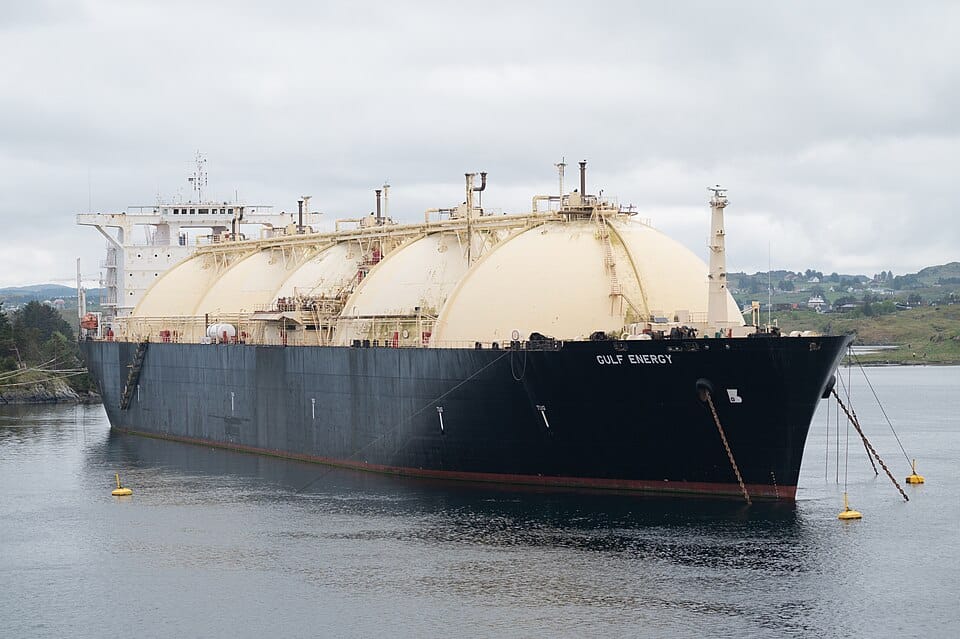
Warm Winter Depresses Gas Demand
Spot liquefied natural gas prices in Northeast Asia fell 15% in the first two weeks of January to $11.50 per million British thermal units, their lowest level since October 2024, as above-average temperatures across Japan, South Korea, and northern China reduced heating demand. The Japan-Korea Marker (JKM) benchmark, tracked by S&P Global Commodity Insights, had been trading near $13.50 in December.
January temperatures in Tokyo averaged 7.2 degrees Celsius, 1.8 degrees above the 30-year norm, according to the Japan Meteorological Agency. Seoul recorded similarly mild conditions, with average temperatures 1.5 degrees above the seasonal average.
Storage Levels Remain High
LNG storage at Japan's 33 major receiving terminals stood at 78% of capacity as of January 12, well above the five-year average of 65% for this period. South Korea's KOGAS reported inventory at 82% of capacity, while Chinese storage facilities operated at an estimated 70%.
"The combination of high inventories and mild weather has removed urgency from spot procurement," said Chong Zhi Xin, director of LNG analytics at consultancy Wood Mackenzie. "Asian buyers are in no rush to secure additional cargoes for the remainder of winter."
Global Supply Expansion
The price decline also reflects a structural shift in global LNG supply. New liquefaction capacity from the United States, Qatar, and Mozambique is expected to add approximately 80 million metric tons per year between 2025 and 2028, a 20% increase in global supply. The first LNG from Venture Global's Plaquemines facility in Louisiana began flowing to Asian markets in November.
Qatar's North Field expansion project, which will increase the country's LNG export capacity from 77 million to 126 million metric tons per year, is on track for its first phase to begin production in late 2026.
Impact on Asian Energy Importers
Lower LNG prices benefit Asia's major importers. Japan's LNG import bill fell 18% year-over-year in December to approximately $5.8 billion. South Korea's Korea Gas Corporation reported a 12% decline in procurement costs.
India, which has been expanding its LNG import capacity with new terminals in Dhamra and Jaigarh, is expected to increase spot purchases at current price levels. Indian spot LNG demand is projected to rise 15% in 2026, according to the International Group of Liquefied Natural Gas Importers.
Coal Phase-Out Economics
The price environment has improved the economics of coal-to-gas switching in Asia. At $11.50 per mmBtu, gas-fired power generation costs approximately $55 per megawatt-hour in Japan and South Korea, below the $62 per MWh cost of imported thermal coal when carbon costs are factored in under both countries' emissions trading schemes.
Japan's Ministry of Economy, Trade, and Industry is reviewing its basic energy plan, with a revised target for gas's share of power generation expected to be published in March. Current targets call for gas to provide 20% of electricity by 2030, down from 34% today.
Price Outlook
Analysts at Goldman Sachs forecast JKM spot prices will average $12 per mmBtu in the first quarter of 2026 and $13 in the second quarter, with a potential rebound in the fourth quarter if winter 2026-2027 returns to normal weather patterns. Long-term contract prices, typically linked to oil with a slope of 10% to 12%, remain at approximately $13.50 per mmBtu at current Brent prices.