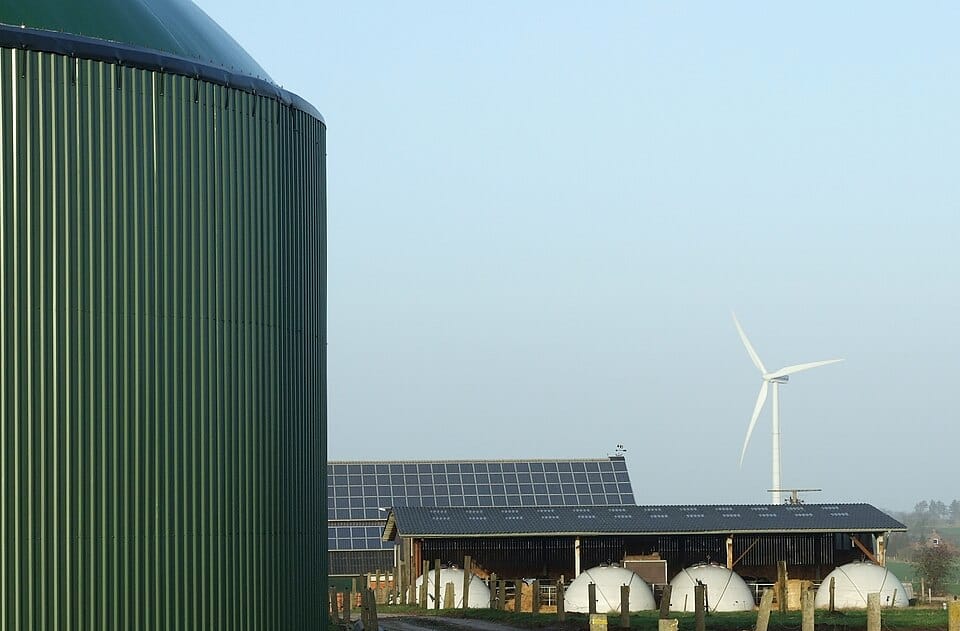
Green Silk Road Takes Shape
China directed 62% of new Belt and Road Initiative investment commitments toward renewable energy and digital infrastructure projects in 2025, a sharp pivot from the heavy-construction and fossil-fuel focus that characterized the program's first decade, according to research from the Green Finance and Development Center at Fudan University. Total new BRI commitments reached $78 billion, down from a peak of $125 billion in 2017 but reflecting higher-quality, more targeted investments.
Renewable energy projects accounted for $32 billion of the total, with solar farms in Pakistan, wind installations in Kazakhstan, and hydropower projects in Laos and Cambodia representing the largest commitments. Digital infrastructure — including data centers, 5G networks, and submarine cables — attracted $16.4 billion.
Coal Financing Effectively Ended
New financing for coal-fired power plants through BRI channels fell to zero in 2025, following President Xi Jinping's 2021 pledge that China would not build new coal projects abroad. The last BRI-financed coal plant, a 1,320 MW facility in Bangladesh, was commissioned in September.
"The Green BRI is not just rhetoric — it's reflected in the data," said Christoph Nedopil Wang, director of the Fudan center. "Chinese policy banks and state-owned enterprises have genuinely shifted their project pipelines toward renewables."
Key Projects in 2025
Major renewable commitments included a 3 GW solar park in the Cholistan Desert of Pakistan ($2.8 billion, led by PowerChina), a 1.5 GW wind farm in Kazakhstan's Mangystau region ($1.9 billion, China Energy Engineering Corp.), and a 500 MW floating solar installation on Indonesia's Cirata Reservoir ($650 million, Huaneng Group).
Digital projects included Huawei's construction of 5G networks in Saudi Arabia ($1.4 billion), a China Mobile-led submarine cable connecting Singapore, Indonesia, and the Philippines ($800 million), and Alibaba Cloud data centers in Malaysia and Thailand.
Debt Sustainability Improvements
A significant criticism of the BRI has been the debt burden imposed on recipient countries. In response, China has restructured approximately $28 billion in BRI-related loans since 2020, primarily in Africa and Central Asia. New loan terms increasingly incorporate longer maturities, lower interest rates, and revenue-sharing structures rather than fixed sovereign guarantees.
The Export-Import Bank of China has introduced green bond frameworks for BRI financing, allowing it to tap international capital markets for environmentally certified debt that carries lower borrowing costs.
Geopolitical Context
The BRI's evolution occurs against a backdrop of competing infrastructure initiatives. The United States' Partnership for Global Infrastructure and Investment (PGII) committed $45 billion globally in 2025, while the European Union's Global Gateway program deployed $20 billion, primarily in Africa and Latin America.
India's participation in BRI remains nil — New Delhi opposes the initiative partly because the China-Pakistan Economic Corridor passes through Pakistan-administered Kashmir, which India claims. India has instead expanded its own development finance through the International Solar Alliance and bilateral agreements with African and Southeast Asian nations.
Outlook
Analysts project BRI investment will stabilize at $70 billion to $80 billion annually through the end of the decade, with renewables and digital accounting for an increasing share. The October 2025 Belt and Road Forum in Beijing, attended by representatives from 130 countries, endorsed a framework for green and sustainable BRI financing that includes mandatory environmental impact assessments and climate risk disclosure for all new projects.